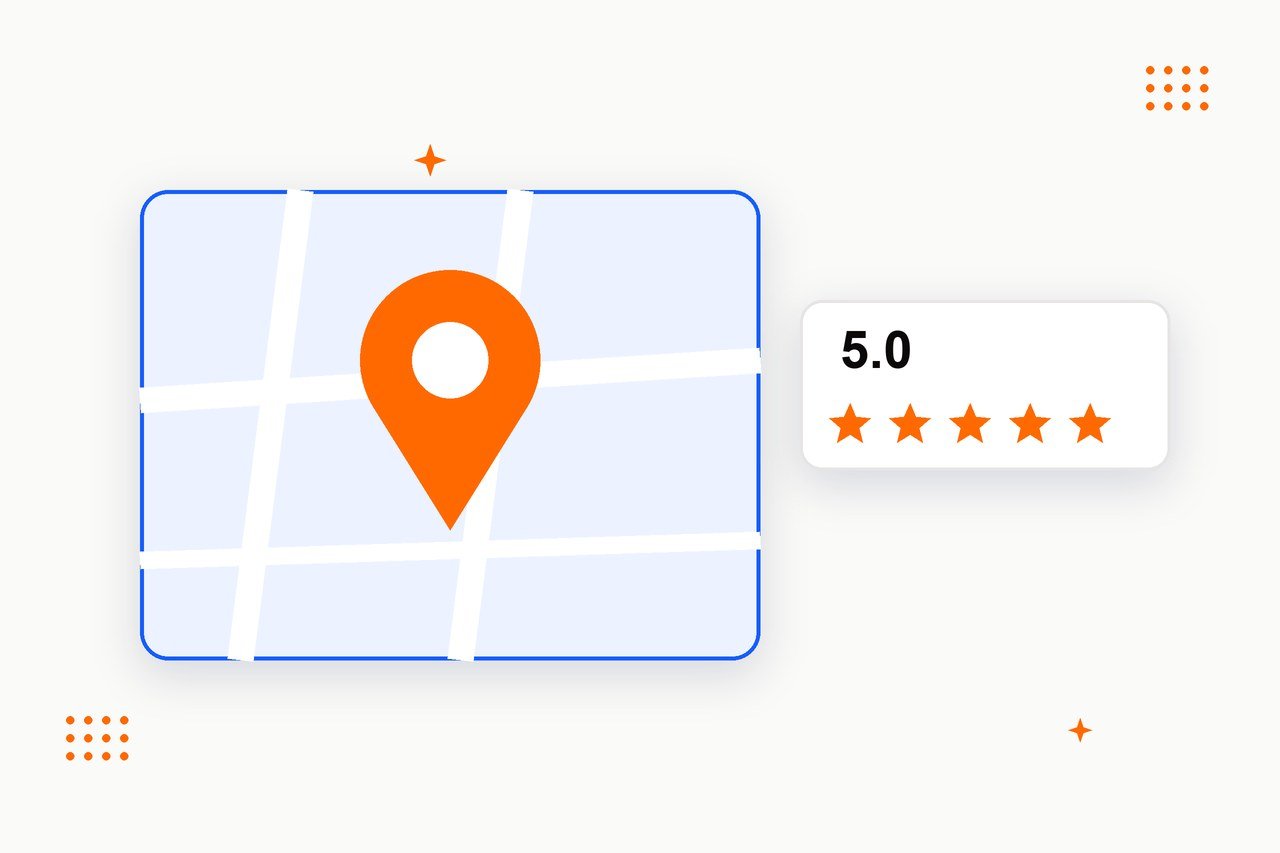
Local SEO helps people nearby find your business in Google Maps, in the block of three businesses above the search results and, more and more often, in AI answers to “near me” questions. I set up your Google Business Profile, a way to collect reviews, your business listings in directories, local pages on your website and structured data. It is one of the fastest-paying areas of SEO, because someone looking for a service nearby is usually already ready to buy.
What local SEO is
Local SEO is search optimization for queries tied to a place, such as “car service in [city]”, “dentist near me” or “flower delivery in [city]”. For these queries Google shows a map with three businesses above the regular results. That block collects a large share of the clicks, calls and direction requests.
Google itself names three main local ranking factors. Relevance is whether your profile matches the search. Distance is how far you are from the person searching. Prominence is how well known your business is, based on reviews, mentions, links and search rankings. You can’t change distance, but relevance and prominence can be grown systematically.
Why AI matters here now too
People increasingly ask ChatGPT, Gemini or Google’s AI Mode things like “where can I eat nearby” or “which plumber would you recommend”. To answer, AI assistants draw on map data, reviews and directories. So a well-kept Google Business Profile and consistent business data now work in two directions at once, for Google Maps and for AI recommendations.
Six pillars of local SEO
Google Business Profile
The right categories, services, opening hours, attributes, photos and regular posts.
Reviews
A system for getting new reviews steadily, and a reply to every one of them, including the negative ones.
Directory listings
The same name, address and phone number on Google, Apple and Bing Maps and in local business directories.
Local pages
Pages on your website for a specific city or service area, with real content rather than copies.
Structured data
LocalBusiness schema with your address, opening hours and contacts, so Google and AI understand your business precisely.
Measurement
Calls, direction requests, website clicks and your position on the map from different points around the city.
Pillar 1: Google Business Profile
The most common mistake is the wrong primary category. It has the biggest say in which searches your profile shows up for. After that come secondary categories, a list of services or products, exact opening hours (especially on public holidays), good photos and regular posts.
What I fix in the profile
- Primary and secondary categories based on real searches
- Services or products with descriptions
- Opening hours, service area, contacts and a link to the right page on your website
- Photos and regular posts
- Attributes such as payment methods, accessibility and languages
Pillar 2: reviews
Google states that high-quality, positive reviews from customers can improve a business’s visibility. Reviews shape both the buyer’s decision and AI recommendations, because AI often sums up what customers write about a business. I help you set up a simple process that covers when and how to ask for a review, a short link or QR code, and reply templates. Don’t buy fake reviews. Google removes them and may restrict your profile.
Pillar 3: business data in directories
If one directory lists an old address and another shows a different phone number, Google and AI can’t be sure which data to trust. I find your business listings on the maps and in local business directories, fix the inconsistencies and register you where you’re missing.
Pillar 4: local pages
If you serve several cities, each one deserves its own page with real information about where exactly you work, what a call-out costs, examples of your work in that city and local reviews. Pages that differ only by the city name perform poorly and may be treated as spam.
Pillar 5: structured data
LocalBusiness schema tells Google and AI plainly what your name, address, opening hours, contacts and line of business are. It is a small technical job, but it lowers the chance of mistakes in AI answers. I cover schema in more detail in my guide to technical SEO.
Pillar 6: measurement
Google Business Profile insights show calls, direction requests and website clicks. On top of that, I check where you appear on the map in different parts of the city, because local rankings depend heavily on where the searcher is standing. I separate website traffic from the profile in Google Analytics, so you can see how many enquiries the map brings in.
Who local SEO suits best
- Service businesses that work in a specific city or region, such as tradespeople, repair shops, clinics and beauty salons.
- Physical shops, restaurants, cafés and accommodation.
- Online stores with a pickup point or a showroom.
- Companies with several branches in different cities.
How the work goes
Review 1 week
I look at your Google Business Profile, your competitors on the map, your directory listings and the local pages on your website. You get a list of what’s holding you back, and a price.
Fixes 2–4 weeks
Profile optimization, consistent data across directories, schema, a plan for local pages and a process for collecting reviews.
Ongoing care monthly
Posts on the profile, replies to reviews, new local pages and a monthly report on calls, direction requests and map rankings.
What it costs
A one-time cleanup of your Google Business Profile and business data usually costs 250–600 €, depending on the number of locations and how much of a mess the directory listings are. Ongoing care with posts, review management and a report costs 300–700 € per month. You’ll find all prices on the SEO pricing page.
Let’s find out why competitors rank above you on the map
Send me the link to your Google Business Profile and your main service. I’ll tell you what is worth fixing first.
Common mistakes
- Keywords stuffed into the business name. “Example Ltd Car Service [City] Cheap” breaks Google’s rules and can end with a suspended profile.
- Bought reviews. Google detects and removes them, and repeat cases can get the profile restricted.
- Reviews left unanswered. Replies show that the business cares about its customers and help new buyers make up their minds.
- Different data in different places. An old address in a directory or a different phone number on the website lowers the trust of Google and AI.
- The profile points to the homepage. If you have several locations, each profile should lead to the page for its own city.
FAQ
Do I need local SEO if I don’t have a physical location?
If you provide your services at the customer’s place, for example as a tradesperson or a cleaning company, you can have a Google Business Profile with a service area and a hidden address. If you only sell online across the whole country, regular SEO matters more for you and local SEO comes second.
How soon will I see results?
Profile fixes often show up within a few weeks. The effect of reviews and mentions builds gradually, so we usually see a stable result within 2–3 months.
Can you restore a suspended Google Business Profile?
I help you find out why it was suspended, fix the violations and prepare an appeal. The final decision is Google’s, so I can’t guarantee the outcome.
How is local SEO connected to AI?
When AI assistants answer local questions, they rely on map data, reviews and directories. A well-kept profile and consistent data make it more likely that AI will recommend you specifically. There’s more on this on the AI SEO services page.
Related guides
- AI SEO Services: how to get into ChatGPT, Gemini and Google AI recommendations.
- Technical SEO: schema markup and the rest of the technical groundwork.
- SEO Audit: a full check of your whole website.
- SEO Content Writing: copy for your local pages.